Ingredients
- What is Japanese-style Rice?
- The Reason Why You Need Japanese Rice for Your Japanese Cooking
- Japanese Rice Available In the US
- Visual Walkthrough & Tips
- FAQ
- How to Store and Reheat
- Recipes that Goes Perfectly with Cooked Rice
- Printable Recipe
- India - Long grain Basmati rice
- Italy - Short grain Arborio rice (for risotto)
- Thailand - Long grain Jasmine rice for savory, short grain sticky rice for sweets
- Mexico - Medium-long grain Sinaloa
- Japan - Short grain rice
- Tamaki Gold (田牧米)- Tamaki is a Japanese rice brand developed by Ichiro Tamaki, a Japanese philanthropist and agricultural consultant, who moved to California in 1989 and started growing and milling rice. The rice is soft and tender with a glutinous texture, typical features of Japanese rice. The quality is comparable to many types of rice grown in Japan. It is well-loved by Japanese people living in the U.S. If you are looking for quality without regard to price, this is the rice to go!
- Kagayaki California Premium Short Grain Rice- Slightly more affordable California-grown Koshihikari rice. This type of rice has a soft texture, and as its name suggestions (kagayaki=shine) it develops a shiny appearance after being cooked. However, it may have a slightly lower level of sweetness comparably.
- Tamanishiki (玉錦)- A koshihikari rice produced in California. It has a glutinous texture and is cooked with more firmness than Tamaki rice. It is also more reasonably priced than Tamaki Rice!
- Yuki No Kakera “Snowflake” (雪のかけら)- This is a unique variety of rice known as California Milky Queen, which is a combination of koshihikari and glutinous rice. This type of rice has a higher level of stickiness than the other brands due to the inclusion of glutinous rice, making it an excellent choice for those who enjoy a chewy texture and sweet taste.
- Nishiki Premium Rice (錦)- When I lived in England, I used to eat Nishiki rice. It is readily available and affordable compared to other brands, but it is actually medium-grain rice, not short-grain rice.
- Chicken Karaage
- Shogayaki (Japanese-style Ginger Pork)
- Mabo Dofu(Japanese-style Mapo Tofu)
- Miso Glazed Salmon
- 300 guncooked Japanese ricesometimes labeled "sushi rice" outside of Japan
- 400 ml cold waterpreferably soft water
- First, measure out300 g uncooked Japanese rice. We recommend weighing it out using kitchen scales or a Japanese rice cup. (See note)
- Next, pour the rice into a sieve and place the sieve over a large bowl. Pour cold water onto the rice so that the bowl fills up and drain immediately.
- Fill up the bowl again but this time, swish the rice around gently to wash. When the water becomes cloudy, drain it out and repeat 5 times in total.
- Pour the rice into a mixing bowl and submerge in cold water. Cover and soak for 30 minutes in summer or up to 2 hours in winter.
- Once the rice has finished soaking, pour it back through the sieve and place over an empty bowl to dry for 5 minutes.
- Transfer the rice into a pot with a thick base. Pour in400 ml cold water, place a lid on top and transfer to the stove. Bring to a boil over a medium heat and do not remove the lid at any point.
- Don't take off the lid, just listen out for the boiling water. Once you can hear it bubbling consistently, set a timer for30 seconds.Once 30 seconds are up, reduce the heat to medium-low and set a timer for2 minutes.
- After 2 minutes, reduce the heat to low and simmer for5 minutes.Turn up the heat to max for 10 seconds and then turn off the heat completely, leave the rice to steam in the pot on the warm stove for10 minutes. Don't be tempted to take off the lid or mix it before the 10 minutes are up.
- After 10 minutes remove the lid. Scoop and fold with the rice with a rice paddle, and use the edge of the rice paddle to break up the rice. (If you don't have a rice paddle, use a spoon or silicone spatula dipped in water to prevent the rice from sticking.)
- Serve up and enjoy!
- One Japanese rice cup holds 150 g of uncooked rice and 175 ml of water, so the correct ratio is 1.15 cup sof water for every 1 cup of rice (200 ml water:150 g rice).
- To store, cool and wrap with plastic wrap or transfer to airtight containers. Freeze for up to 1 month.
- Always use a microwave to defrost frozen rice (3 minutes at 600 W or 3:30 minutes at 500 W, adjusting for quantity).
- Never refreeze previously frozen rice.
- Never store cooked rice at room temperature for more than one hour.
- Avoid refrigerating cooked rice as the starch returns to its beta state, making rice dry, poor-tasting, and difficult to digest.
- When you’re using a rice cooker instead of a pot, just switch to the rice cooker method starting from step 6 in the instructions.
Instructions
- What is Japanese style Rice?
- The Reason Why You Need Japanese Rice for Your Japanese Cooking
- Japanese Rice Available In the US
- Visual Walkthrough & Tips
- How to Store and Reheat
- Recipes that Goes Perfectly with Cooked Rice
- Printable Recipe
Tips
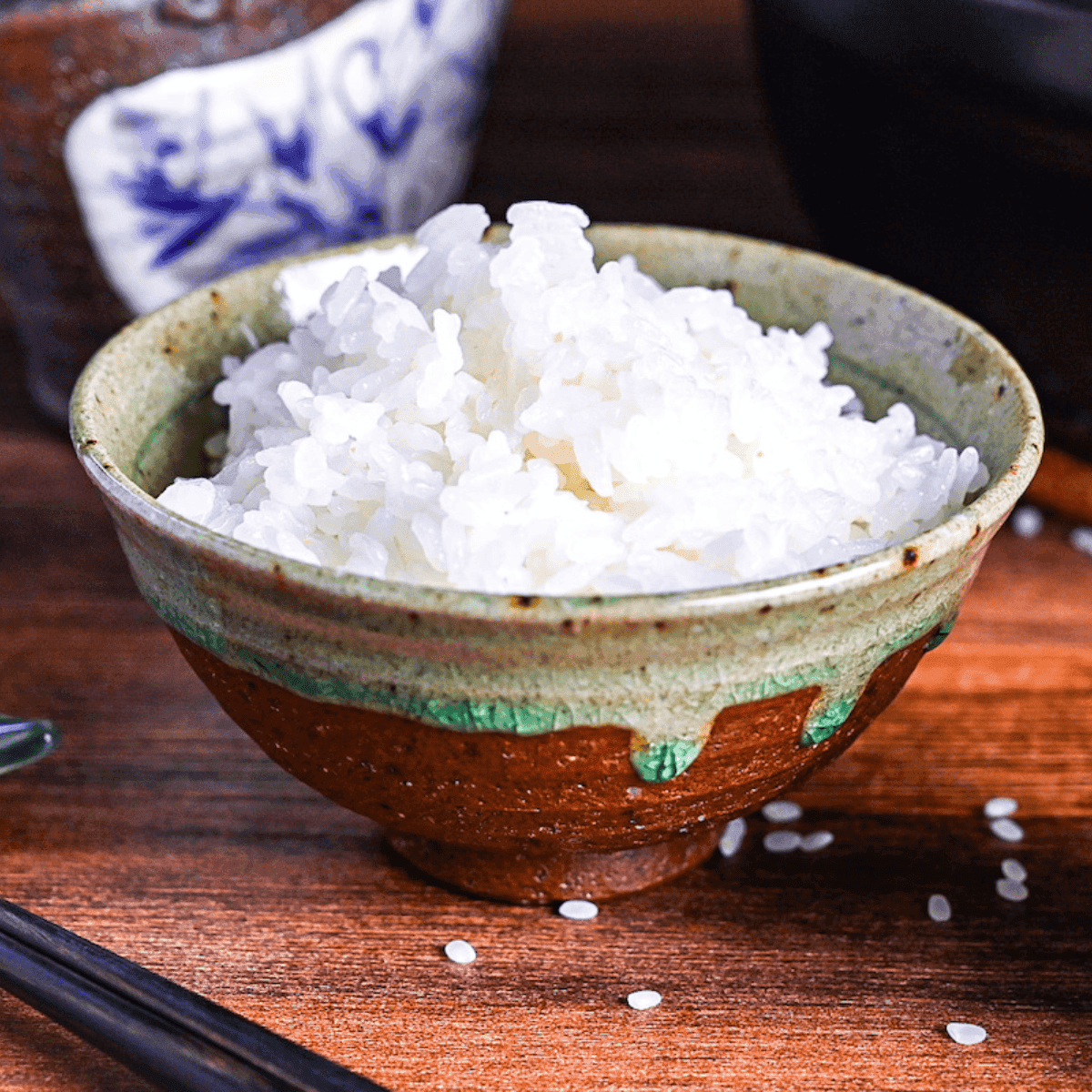
To clarify, this article does not discuss how to cook rice produced exclusively in Japan. Instead, it refers specifically to Japanese-style short-grain white rice. It’s important to note that this type of rice can also be grown in other countries, such as the United States.