Use mayonnaise instead of egg if necessary:While I prefer using eggs for tempura batter, using mayonnaise as a substitute can be convenient for making small batches and avoiding leftovers. For small batches, mayonnaise is more manageable than measuring a fraction of an egg. Typically, one egg can be substituted with 1 tbsp of mayonnaise. But remember this only works with mayonnaise that contains eggs likeKewpie mayo.
Dry and dust with flour:A common issue with tempura is the batter not sticking. To prevent this, dry the ingredients with a paper towel and coat them with a light flour layer before dipping them in the batter. This is especially crucial for shrimp and fish.
Clean oil and make tenkasu:During tempura frying, bits often break off and float in the oil. To maintain oil quality, remove these bits with a fine mesh spoon between batches; otherwise, they can burn, making the oil bitter and discolored. These tempura flakes, called “tenkasu” (天かす), are useful. They can be used to topudon noodle soupsor be used in dishes likedevil’s onigiri. To make more tenkasu, drizzle the leftover batter into the oil. After frying, drain them on kitchen paper and store them in the freezer in a sealable freezer bag.
Tendon (rice bowl with tempura)
Tempura udon(udon noodles soup with tempura)
Tempura soba(soba noodles soup with tempura)
Zaru udon(cold udon)
Zaru soba(cold soba)
Tenjyu (Tempura on rice in a box)
Tentoji (Tempura on rice with egg)
Chicken Tempura (Toriten):I understand many people may want to use this tempura batter for chicken, but I would not recommend it, especially for chicken breast. The reason is that this tempura batter is very thin, and the surface of the chicken breast is too smooth. For the best results in making chicken tempura, I suggest usingmy Toriten batter, specifically designed for regional chicken tempura and much easier to work with.
Shrimp Tempura (Ebiten):Shrimp tempura is a popular Japanese dish of tender shrimp coated in a crispy batter. It can be enjoyed on its own or paired with other Japanese specialties such astempura sobaandudon. The main types of shrimp/prawns used in making tempura are Japanese Tiger Prawn, Black Tiger Prawn, and Whiteleg Shrimp.
Eggplant Tempura:Eggplant, also known as “nasu” in Japan, is a great option for making tempura due to its vibrant purple skin and soft, juicy flesh. Its versatility in cutting and presentation methods allows for an impressive visual display.This recipewill guide you through three popular ways of serving eggplant tempura in Japan, helping you achieve a delicious combination of presentation and texture.
Sweet Potato Tempura:Sweet potatoes are a delightful ingredient for tempura due to their charming reddish-purple skin, delectably sweet and creamy core, and versatile cutting and presentation possibilities.This sweet potato tempura recipewill guide you through three unique ways to cut and present sweet potato tempura, adding a dash of creativity to your culinary skills.
Tonkatsu (Deep-fried Japanese Pork Cutlet)
Agedashi Tofu (Japanese Deep Fried Tofu)
Ebi Furai (Japanese Deep-fried Shrimp with Panko)
Curry Flavor Age Gyoza (Deep-Fried)
Tempura paper
Japanese-style fryer
Stainless steel cooking tray with wire rack
150 ml cold water
100 ml carbonated water
30 gcornstarch
150 gcake flour
1 eggrelatively small sized, chilled
3 ice cubes
cooking oilfor deep frying, neutral flavored high smoke-point such as rice bran, vegetable, can ola, peanut or white sesame
Measure out150 ml cold waterinto a jug and place it in the fridge for 20-30 minutes. Place100 ml carbonated waterin the fridge too. (Preferably an unopened bottle.)
Sift30 g cornstarchand150 g cake flourinto a bowl. Mix them and place the bowl in the freezer for 20-30 minutes.
While you wait for the water and flour to chill, prepare your tempura ingredients by washing, cutting, and drying them with kitchen paper to remove any excess moisture.
Once 30 minutes have passed, start preheating yourcooking oilto180°C(356°F).
Pour the chilled water and sparkling water into a bowl.
Crack1 egginto the bowl and whisk. (If bubbles or foam forms on top, scoop it out with a spoon.)
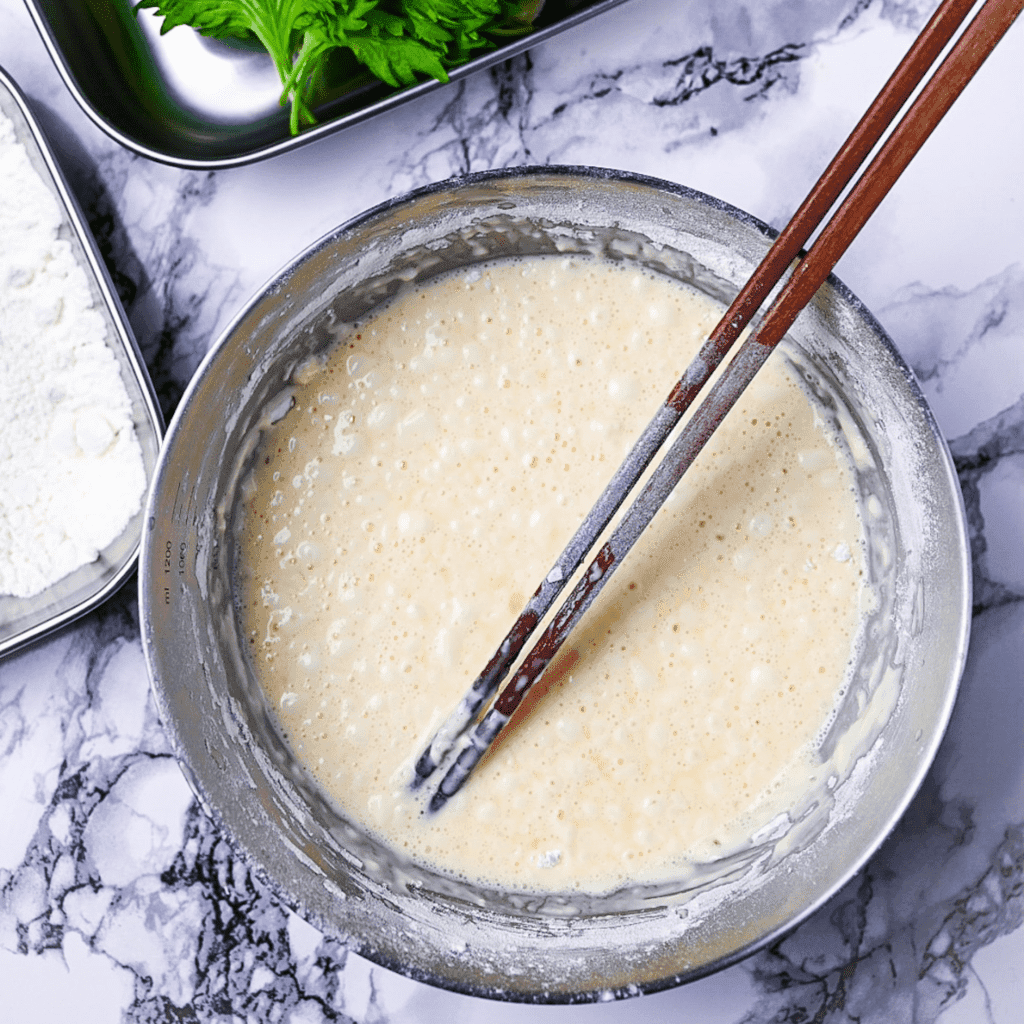
Remove the chilled flour and starch mixture from the freezer. Add it to the egg mixture one third at a time, gently drawing crosses through with chopsticks to incorporate it. (Do not whisk or over mix, preventing gluten formation is key.)
Add3 ice cubesto the batter.
Test your oil by adding a drop of batter, if it sizzles and floats you're ready to fry.Coat your ingredients in a thin layer of flour, brush off the excess and then dip them in the batter.
Carefully place the battered ingredients straight into the oil and fry until crispy butbeforethey turn golden. (I recommend frying one type of ingredient at a time to ensure even cooking.)
Once cooked, place on a wire rack to allow the excess oil to drip off.
Serve and enjoy!
Instructions
What is Tempura Batter?
How I Developed This Recipe
Popular Ingredients to Use for Tempura
Visual Walkthrough & Tips
What to Eat with Tempura
The Japanese Way to Eat Tempura
How to Cook Tempura Dishes by Ingredients
FAQ & Troubleshooting
More Japanese Deep fried Recipes
Printable Recipe
Authentic Japanese Tempura Batter (with Secret Tips!) · Dinner Match Lab | Dinner Match Lab