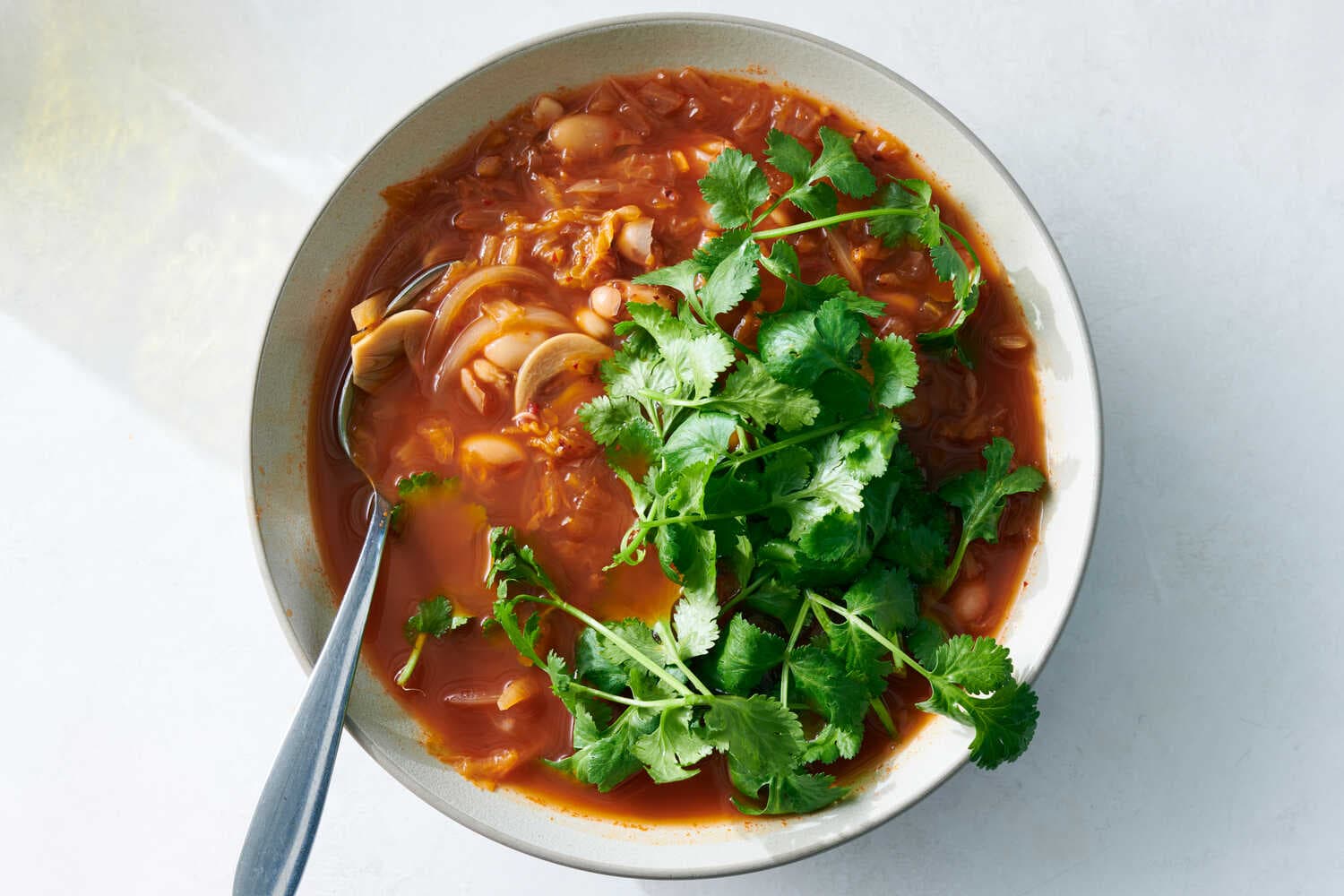
Ingredients
- 1 packed cup finely chopped kimchi (8 ounce s; see Tip), plus any accumulated juices
- 1 quart chicken stock, preferablyhomemade
- 4 large garlic clove s, thinly slice d
- 1(2-inch) piece ginger, slice d
- 1 tablespoon gochugaru (see Tip), plus more to taste
- 1 tablespoon fish sauce, plus more to taste
- 1 tablespoon doenjang or miso (see Tip)
- Salt
- 1(15.5-ounce) can large white beans, such as butter, can nellini or great Northern, rinsed and drained
- 1 small yellow onion, halved, peeled and thinly slice d
- 1 loosely packed cup fresh cilantro leaves and tender stems
Instructions
- To a medium pot, add the kimchi, stock, garlic, ginger, gochugaru, fish sauce and doenjang. Set over high heat until boiling. Partially cover, reduce the heat to medium low and gently boil, stirring occasionally, until the broth is aromatic, 8 to 10 minutes.
- Stir in the beans and onion and continue simmering until warmed through, about 5 minutes. Taste and adjust seasonings, if needed, with salt, gochugaru and fish sauce. Before serving, discard the ginger if you don’t want to eat it and stir in the cilantro.
Tips
Tips Kimchi is sold in many ways and at varying stages of ripeness. For this dish, you want very ripe, well-fermented kimchi for the brightest flavor. Less fermented kimchi will taste like fresh cabbage, whereas well-fermented kimchi will taste sharp and pickled, with small bubbles signaling fermentation. To ferment less ripened kimchi from the store, leave it on the counter in its covered jar at room temperature until it starts to effervesce and smell funky, overnight or up to 48 hours. Return to the refrigerator before using. Gochugaru, a flavorful Korean red-pepper powder, ranges from a fine dust to tiny coarse flakes. Try to buy the coarse variety, for deeper, sweeter flavor. You can find gochugaru at Korean and other Asian supermarkets and at many grocery stores, as well as online. Buy doenjang, often labeled “soybean paste,” in any Korean or Asian supermarket and online. Funkily pungent and packed with savoriness, doenjang is a magical flavor booster that has likely seasoned much of the banchan, or small dishes, that constellate the table at your favorite Korean restaurant. Doenjang is often compared to Japanese miso but tastes stronger. The information shown is Edamam’s estimate based on available ingredients and preparation. It should not be considered a substitute for a professional nutritionist’s advice.